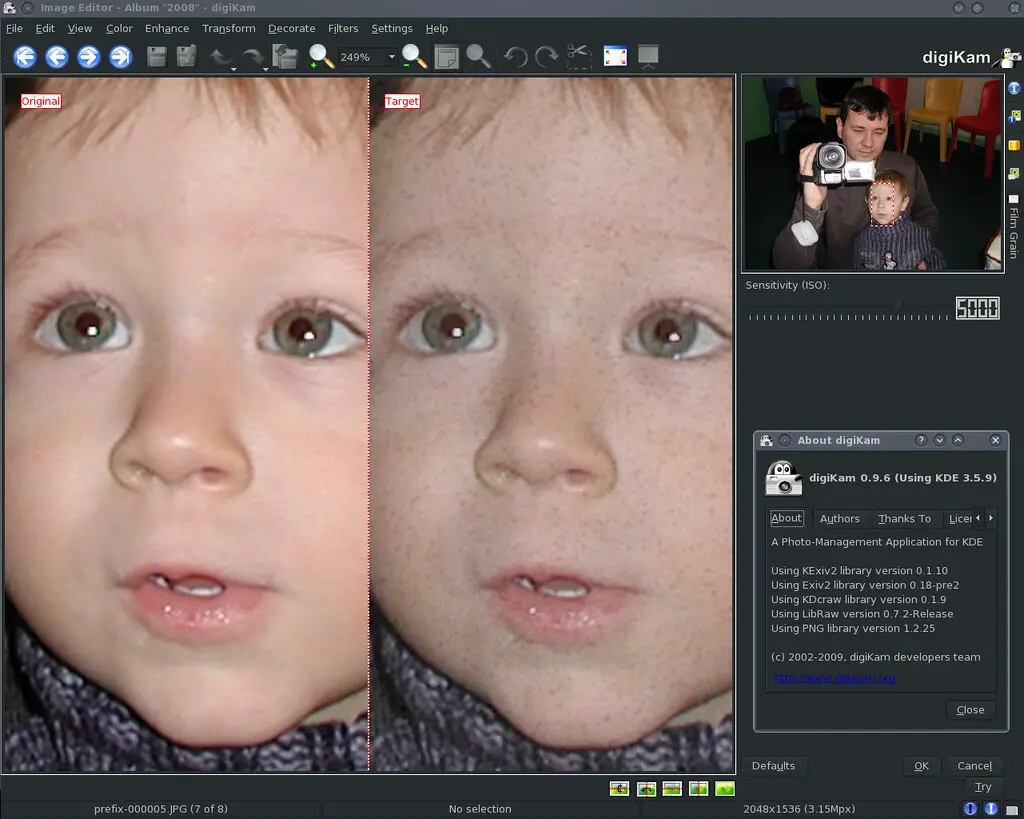
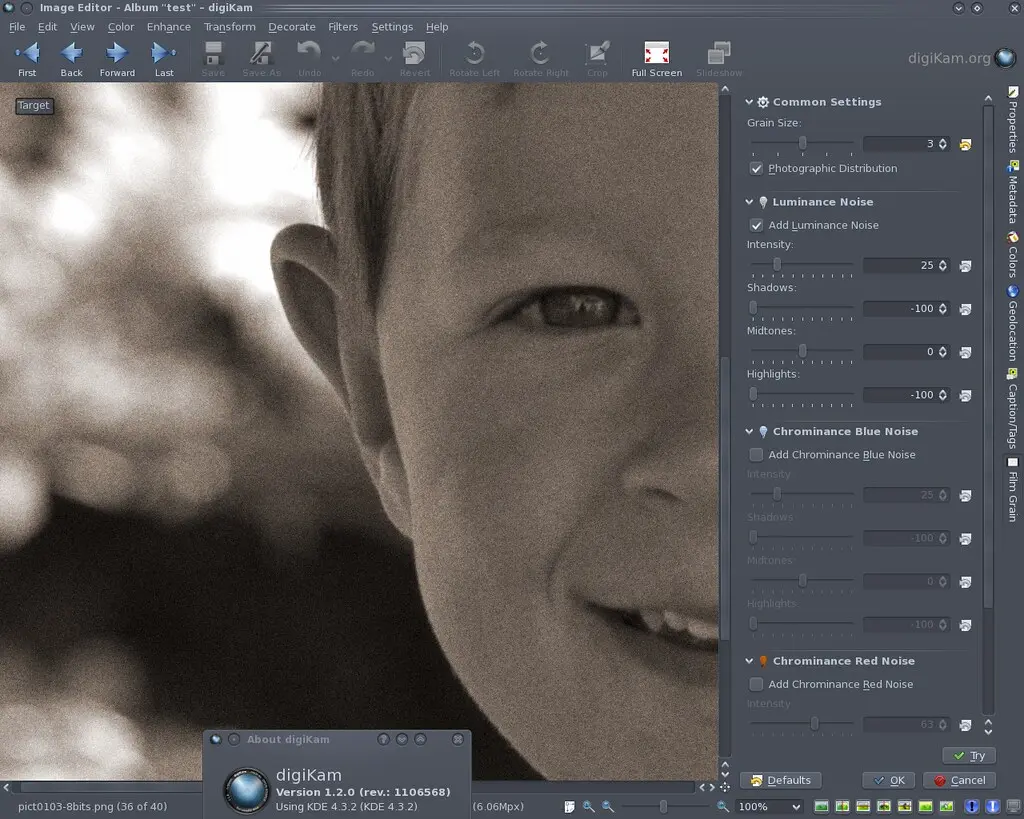
Since a very long time, my TODO list included a complete review of digiKam Film Grain tool. Based on an old Gimp Guru tutorial,
this tool lacks a lots of features as the capability to manage colors and luminosity noise, graininess size, and photo-electronic noise rendering.
I have always been impressionned by PowerRetouche photoshop plugin. This company make great tools for photographers, but of course, all are closed source and non-free. PowerRetouche collection has a Film Grain simulator has you can see in screen-shot below.
Last summer I saw bug #127321 an thought, this can be done by me (partly at least). After some (successful) prototypic implementation, most of the time where spent into smooth integration in the existing project:
adding a solution for migrating from SQLite to MySQL and vice versa
add possibility to start an own database server
and bug fixing...
Because only a few persons trying out this work (which resides atm. in a dedicated branch), the most bugs are possible undiscovered.
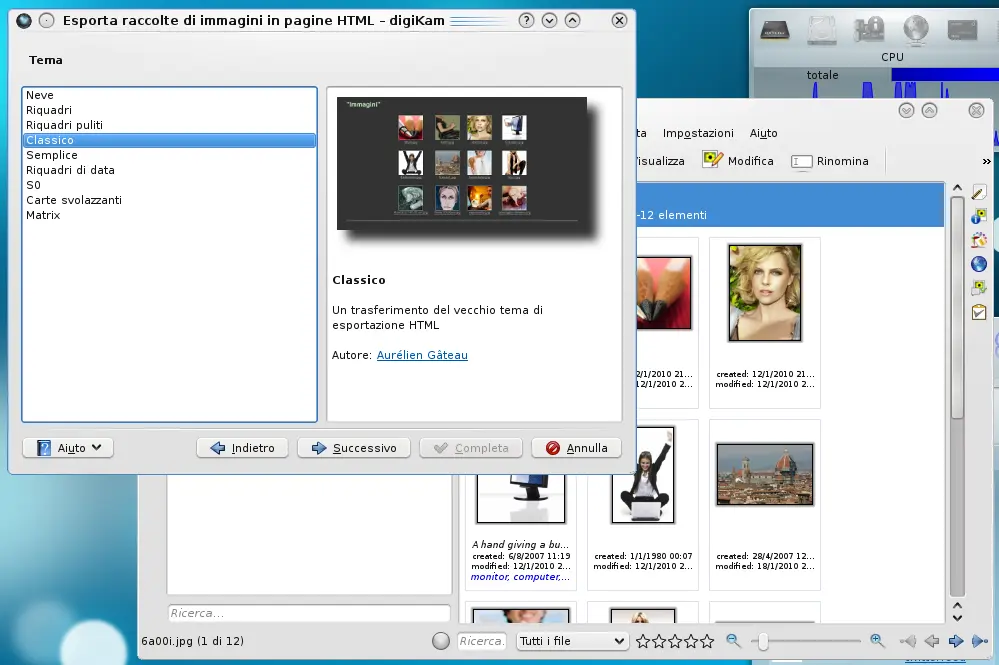
Few months earlier I started to work on HTMLExport plugin and first two updates I made are mentioned in the TODO file or request on bugzilla. The first one is showing template preview alongside theme description as shown in the next screenshot:
The second one is getting metadata from image files during the album creation, using XSLT for the theming mechanism is really powerful, but in the last version the amount of information included in gallery.xml is very limited - now you can access much more information, look at THEME_HOWTO file for a detailed list. There is also a new detailed theme to test this featured, an example on the next screenshot.
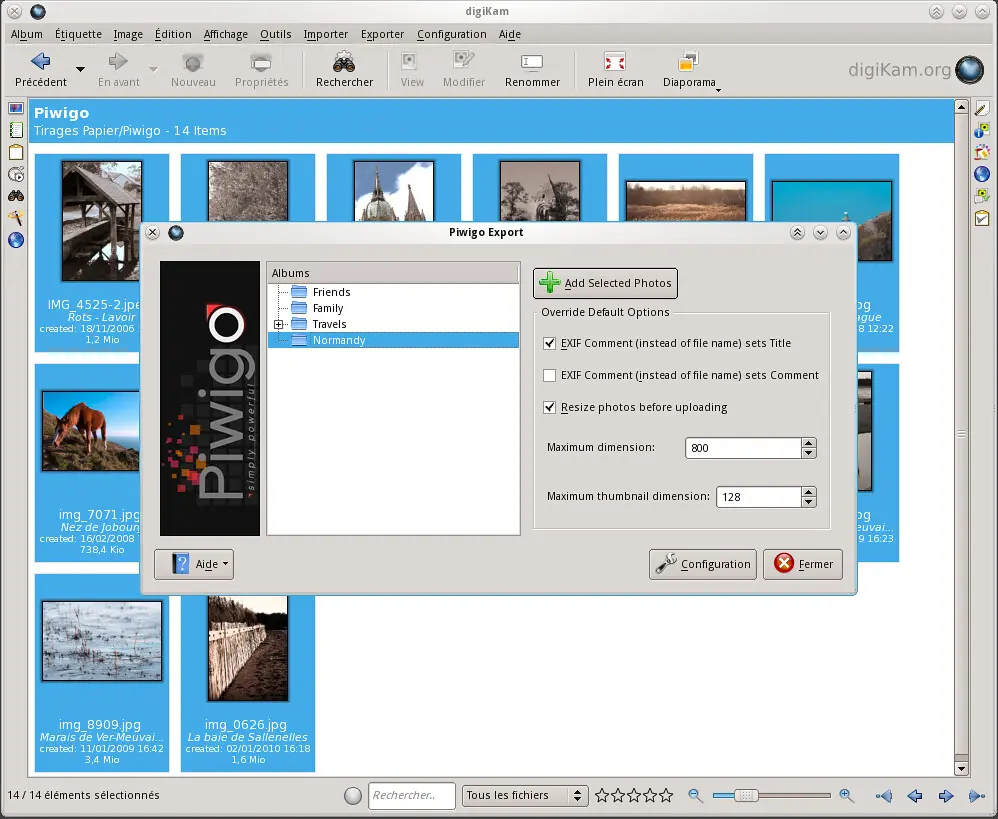
A new export plugin has been added to the Kipi-plugins development trunk: an export to Piwigo plugin!
Some of you may not know Piwigo yet: it's a powerful web gallery based on usual PHP/MySQL technologies. It's a good solution if you want to self-host your photos and avoid third-parties services like Picasa or Flickr. It can be compared to Menalto Gallery, which is already supported by Kipi-plugins, even if I find Piwigo lighter and more complete when it comes to browsing capabilities (hierarchical categories, tags or chronology).
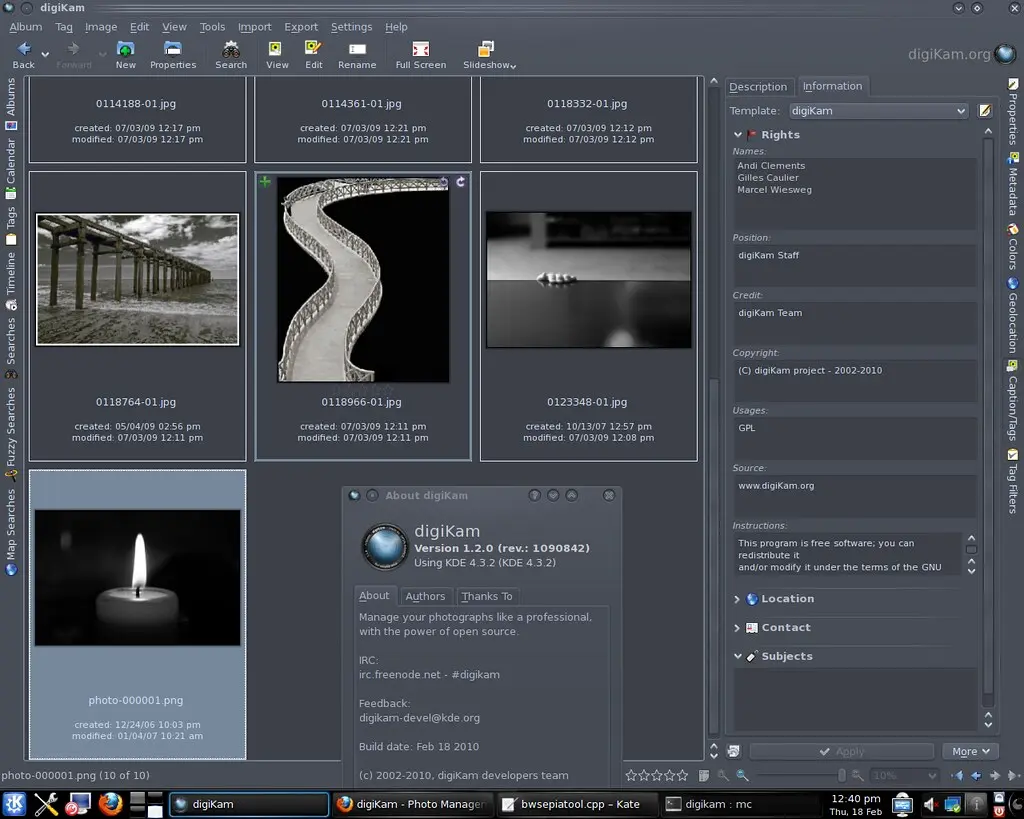
You will be forgiven for thinking that copyrighting photos belongs to the realm of the professional photographer. Even if you consider yourself an amateur, providing copyright and contact information for your photos is a prudent thing to do. Embedding copyright info into each photo may sound like a daunting proposition, but digiKam provides a nifty template feature which lets you create copyright templates and apply them to multiple photos in one go.
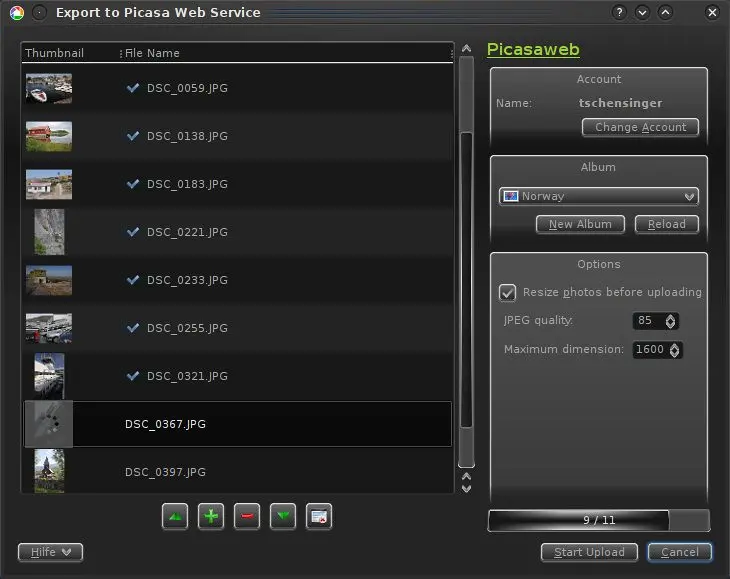
The ui of the picasaweb exporter gains some love and is refreshed in current trunk.
Its look now fits to other kipi export plugins with imagelistview support showing you the current processing element
and a non-modal progressbar to let you work on your next photos while uploading.
Besides the exporter, a basic importer has been added, to let you download all your favourite albums.
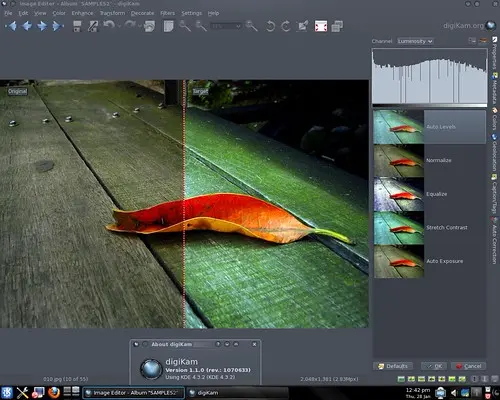
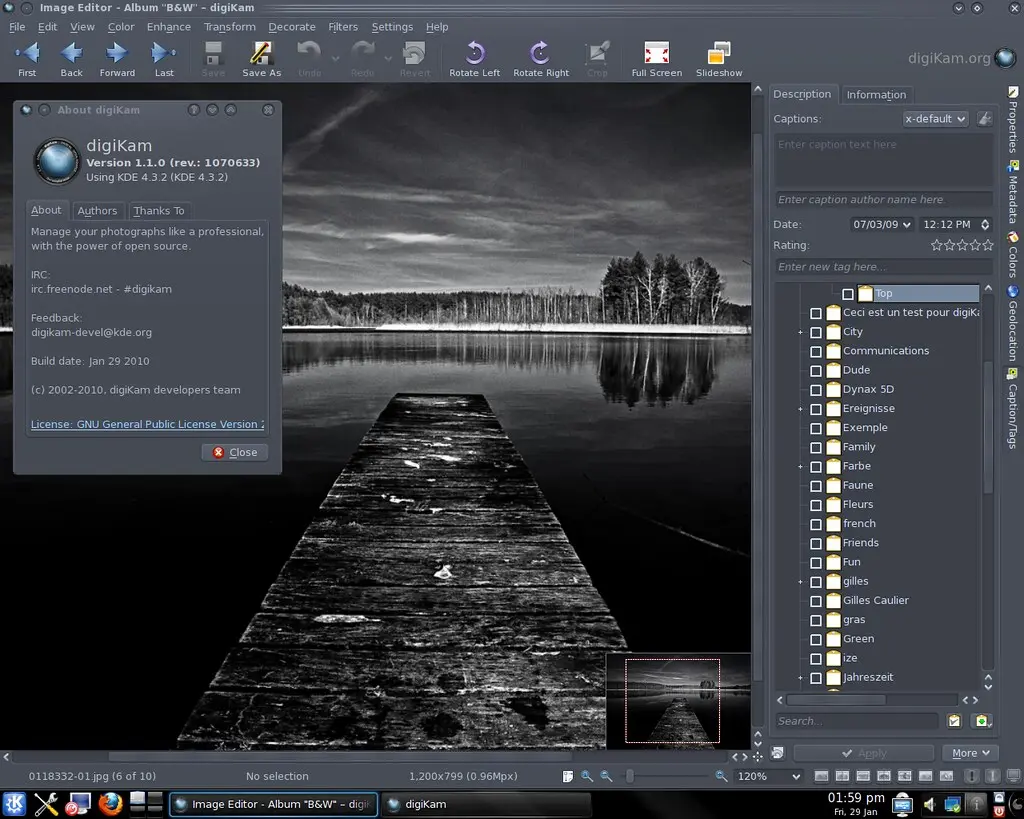
Hot on the heels of digiKam 1.0, the team announced the 1.1.0 release of the popular open source photo management application. While the main focus in version 1.0 was on squashing bugs, the new release of digiKam does sport a couple of new nifty features and improvements.
digiKam team is proud to announce Kipi-plugins 1.1.0 !
kipi-plugins tarball can be downloaded from SourceForge at this url
Kipi-plugins will be also available for Windows. Precompiled packages can be downloaded with KDE-Windows installer. See KDE-Windows project for details.
See below the list of new features and bugs-fix coming with this release:
NEW FEATURES:
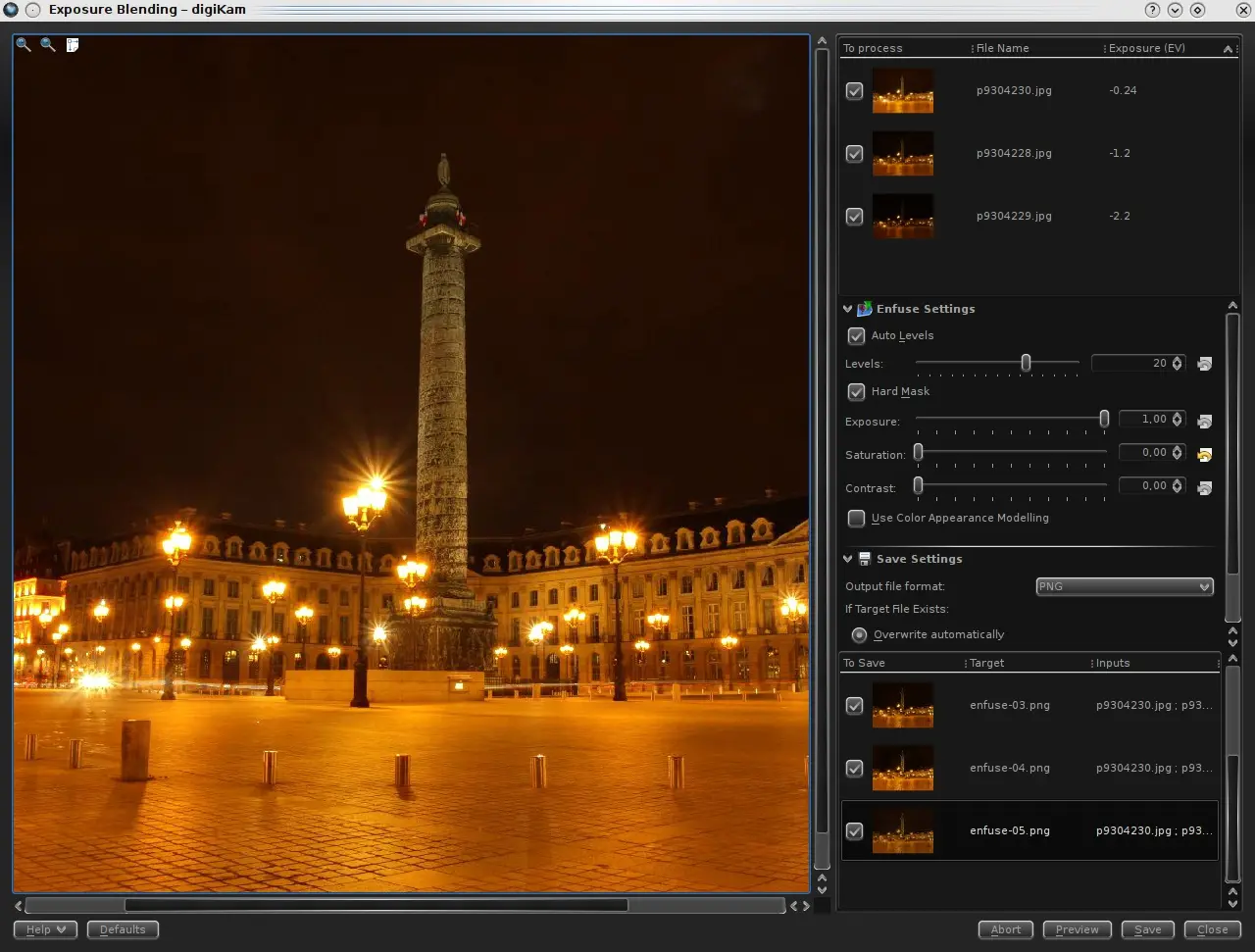
ExpoBlending : New tool to make pseudo HDR image with a stack of bracketed images. PrintAssistant : New custom grid layout. PrintAssistant : Filling page with custom size images.
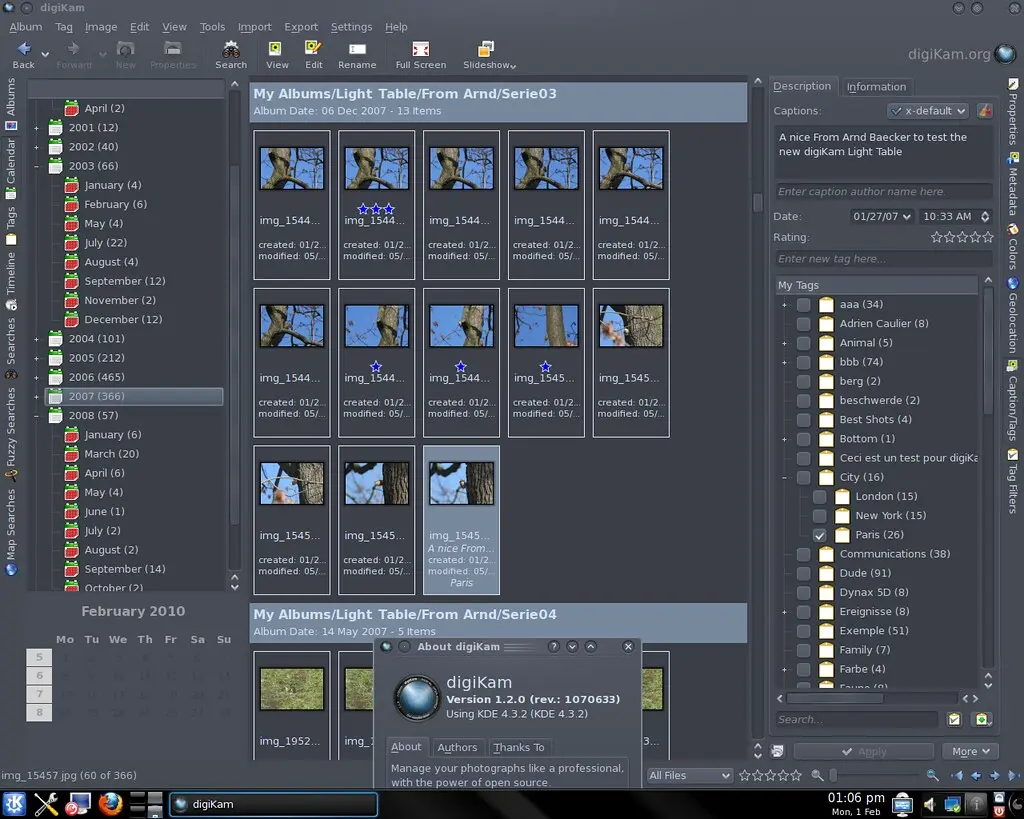
During the last two months Marcel and I ported all tree views in digiKam from Qt3 to Qt4 and its model view concept. These changes are now included in the svn trunk. The new code still needs some serious testing and we would appreciate your help on this.
Some parts of the current digiKam release still rely on old Qt3 support classes. Most prominent are the various tree views in the main view, e.g. for selecting an album to show in the central icon view or filtering by tag. My job since the coding sprint was to port these tree views to Qt4 using the model view concept introduced there. Marcel already wrote the models some time ago so that I could start my work on a solid foundation. This work was done in a separate feature branch for the last two months. Now, after the 1.1.0 release, this branch is merged back into trunk and ready to be included in the next release of digiKam.
digiKam team is proud to announce digiKam 1.1.0 bug fix release!
digiKam tarball can be downloaded from SourceForge at this url
digiKam will also be available for Windows. Pre-compiled packages can be downloaded with KDE-Windows installer. See KDE-Windows project for details.
See the list of new features below and bugfixes coming with this release since 1.0.0 (released at Christmas 2009 : more than 100 files have been closed):